Digital Products vs Digital Services vs Digital Assets: What Is the Difference? (Nigeria Guide 2026)
Confused about digital products, digital services, and digital assets? Learn the simple difference, see Nigerian examples, and find out which one is the best fit for earning online, with a quick comparison table and FAQs.
Published by
Digital Products vs Digital Services vs Digital Assets: What Is the Difference? (Nigeria Guide 2026)
Quick answer:
- A digital product is something you make once, package, and sell again and again (e.g. an ebook, template, course, app, or music file). The buyer receives it and uses it on their own.
- A digital service is work you do for someone online (managing their social media, designing their logo, writing their copy, coaching them). It takes your time, and you get paid for the effort.
- A digital asset is the bigger category: anything digital that has value and can be owned and transferred. Many digital products are digital assets, and so are websites, domain names, photos, and crypto.
Key takeaways
- Products = something you sell. Services = something you do. Assets = something valuable you own.
- Products can scale (sell to many people from one file), while services trade your time for money.
- Services are often the fastest way to start. Products are often the best way to grow.
- Many Nigerians start with a service, then turn what they learn into a product.
- Always check ownership, rights, and safe payment before you buy or sell.
Picture this:
Tola is a graphic designer in Lagos. On Monday, she designs a logo for a client for ₦20,000. On Wednesday, she sells a pack of Instagram templates on a marketplace. On Friday, she transfers a domain name she owns to a buyer.
Three actions, three different things:
- The logo job is a digital service.
- The template pack is a digital product.
- The domain name is a digital asset.
If you’ve ever been confused about these terms, you’re not alone. This guide explains them in plain English, shows how they overlap, and helps you decide which one to focus on when you want to earn online.
In this guide
- What is a digital product?
- What is a digital service?
- What is a digital asset?
- Digital products vs digital services vs digital assets: side-by-side
- The 3-question test
- When products and services mix
- How you earn from each
- Which one should you choose?
- How to get started
- Rights, contracts, and safety
- FAQs
What is a digital product?
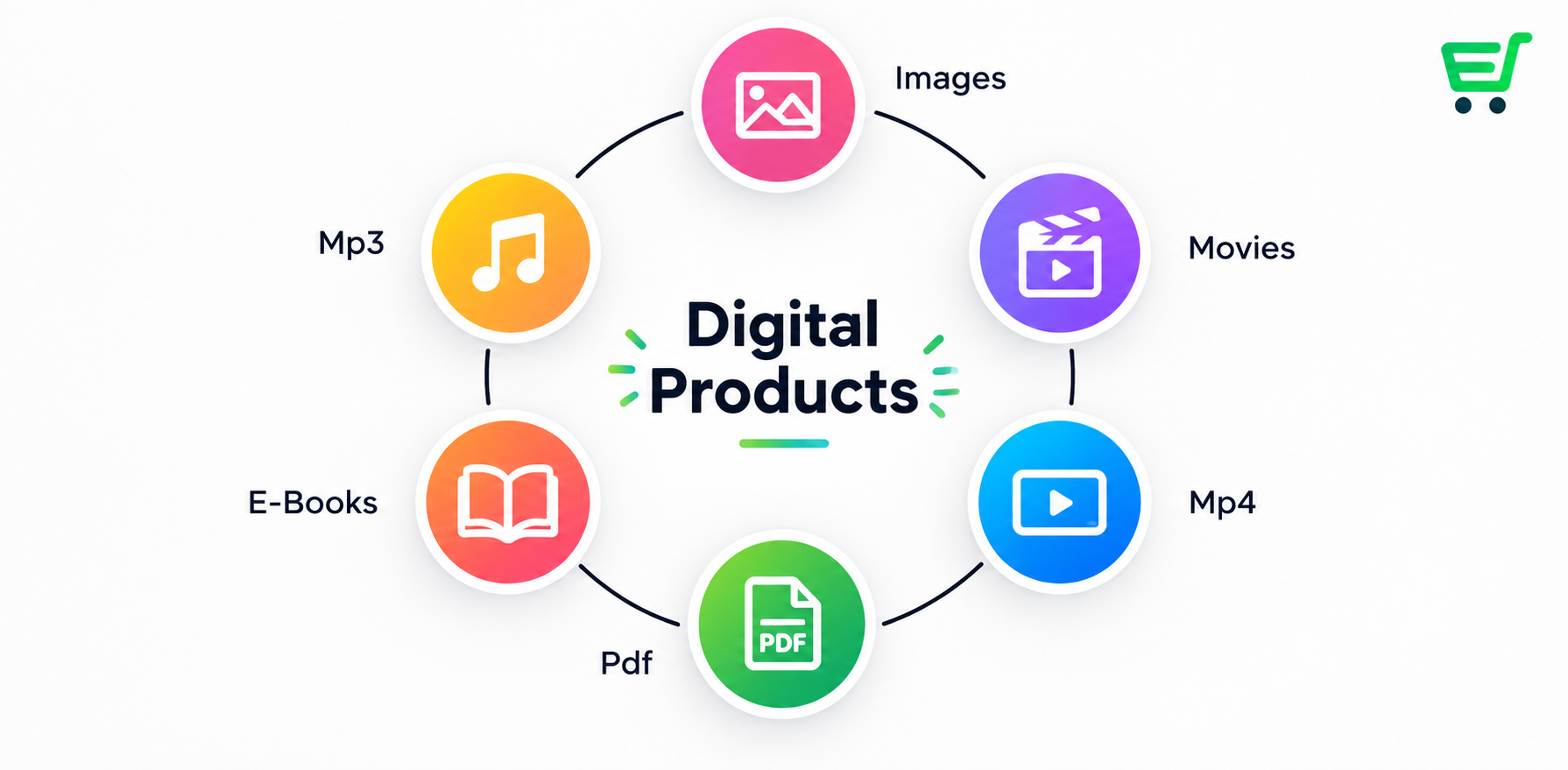
A digital product is a file or resource that exists only in digital form. It is created once and can be sold many times. The buyer gets it (often instantly) and uses it without needing you to be involved.
Examples:
- Ebooks and guides
- Templates (CVs, Canva designs, spreadsheets, planners)
- Pre-recorded online courses
- Music, beats, and sound effects
- Photos, fonts, and design packs
- Apps and software
- Printables and worksheets
Typical traits:
- Delivery can be automated. Unlike services, digital product delivery can be automated, while services usually require ongoing human labor.
- You make it once and sell it many times.
- Low cost to deliver. Once it exists, sending it to the 100th buyer costs almost nothing.
- The buyer gets a copy or a license, usually for a one-time price.
Note: People also say “digital goods” for the same thing. The two terms are often used interchangeably.
What is a digital service?
A digital service is work or help you provide online. The buyer pays for your time, skill, and effort, not for a ready-made file.
Examples:
- Social media management
- Graphic design for a client
- Writing blog posts or ad copy
- Video editing
- Online tutoring and one-on-one coaching
- Virtual assistant work
- Web design for a business
- Customer support
Typical traits:
- It needs your time. Each job takes new effort.
- It’s customized. You adjust to each client.
- It often involves ongoing communication.
- The buyer gets a result or access, but doesn’t “own” your work process.
Digital service like a web design consultation for instance, involves a time-based exchange of labor, not the sale of a static, reproducible electronic file.
What is a digital asset?
A digital asset is anything digital that has value, can be owned, can be transferred to someone else, and can be found or stored somewhere.
Examples:
- Photos, videos, and documents
- Ebooks and manuscripts
- Logos and brand files
- Websites and domain names
- Email lists and online stores
- Social media content
- Cryptocurrency and NFTs
For a deeper look, read our full guide: What Are Digital Assets? A Beginner’s Guide to Buying, Selling, and Renting Online.
Digital products vs digital assets: are they the same?
Not exactly, but they overlap. Here’s the simplest way to see it:
A digital asset is anything digital that has value and can be owned. A digital product is a digital asset that you’ve packaged to sell.
So:
- Your template pack is both a digital asset and a digital product.
- Your domain name is a digital asset, but it isn’t a “product” until you list it for sale.
- A family photo is a digital asset (you own it), but it’s not a product unless you sell it.
- A digital service (like a logo job) isn’t an asset itself. But what it creates, like the finished logo file, becomes a digital asset for the client.
Digital products vs digital services vs digital assets: side-by-side
| Digital product | Digital service | Digital asset | |
|---|---|---|---|
| Simple meaning | Something you make once and sell many times | Work you do for someone | Anything digital with value that can be owned |
| Who does the work? | You, once (then it’s automatic) | You, every time | Depends (made, bought, or earned) |
| How it’s delivered | Download, link, or access, often instant | Through ongoing work and communication | Transferred or stored |
| Does the buyer own it? | Gets a copy or license | Gets the result or access, not the process | Yes, ownership can be transferred |
| How you earn | Sales (one-time or subscription) | Fees, retainers, or per project | Selling, renting, licensing, or holding |
| Can it scale? | Yes | Limited by your time | Depends on the asset |
| Examples | Ebook, template pack, recorded course | Social media management, design jobs, coaching | Website, domain, photos, crypto, logos |
| Startup cost | Low to medium | Often ₦0 to low | Varies |
The 3-question test
Not sure which one you’re looking at? Ask:
1. Can it be delivered without me doing new work each time?
- Yes → likely a digital product
- No → likely a digital service
2. Does the buyer receive something they can keep, use, or own?
- Yes → a product (or an asset)
- No, they receive my time and effort → a service
3. Does it have lasting value that can be transferred to someone else?
- Yes → it’s a digital asset
When products and services mix
Real life isn’t always clear-cut. Many offers combine both. This is called a hybrid product, where the customer receives both files and ongoing access, support, community, or updates.
Examples:
- A recorded course plus a live Q&A: the course is a product, the Q&A is a service.
- A website template plus setup help: the template is a product, the setup is a service.
- A content calendar template plus monthly review: product plus service.
- A website rental: the website is a digital asset; the rental arrangement can include support.
A smart path many freelancers take is to turn a repeated service into a product. For example, if you keep writing the same kind of CV for clients, you could create a CV template pack and sell it many times.
How you earn from each

Earning from digital products
- One-time sales: customers pay once (like ₦3,000 for a template pack)
- Subscriptions or memberships: customers pay monthly for ongoing access
- Bundles: several products together at a better price
Pros: you can sell the same item to many people, and income can continue while you do other things.
Cons: you need to create it first, and you still need to market it.
Earning from digital services
- Per project: a logo for ₦20,000
- Monthly retainer: managing a page for ₦60,000 a month
- Hourly or per task: virtual assistant work
These are example prices to show the idea, not fixed rates.
Pros: you can start fast with no product, and you get paid for your skill directly.
Cons: your income is limited by your time, and it can stop if you stop working.
Earning from digital assets
- Sell them (a website, a domain, a design pack)
- Rent them (a ready-made website for a set period)
- License them (let others use your photo for a fee)
- Hold them if they may become more valuable (for example, a well-built website that grows)
Which one should you choose?
| If this sounds like you... | Start with |
|---|---|
| I need money fast and have a skill | Digital service |
| I want income that repeats and I can create something once | Digital product |
| I have a website, domain, or design collection | Sell or rent digital assets |
| I have little time but some savings | Buy or rent a digital asset (with careful checking) |
| I’m not sure yet | Start with a service, then build a product from it |
How to get started
Starting with a service
- Pick one skill (design, writing, social media, editing).
- Make 3 sample pieces.
- Set 2 or 3 simple packages and prices.
- Message 5 people or businesses a day.
- Agree in writing on work, price, deadline, and payment.
See our guide to how to make money on social media without becoming an influencer for ideas and scripts.
Starting with a product
- Find a repeated problem (for example, “people keep asking for CV templates”).
- Create one small product that solves it.
- Test it with 5 to 10 people.
- Price it fairly and write a clear description.
- List it on a marketplace and promote it.
See 10 easy and best digital products to sell online in 2026 and how to make money online by selling digital assets.
Don’t want to create anything from scratch?
You can use licensed products, affiliate links, or hire help. Read how to make money selling digital products without creating them from scratch.
Starting with almost no money
Read how to start an online business with little or no money.
Not sure which skills to learn?
Read 7 digital skills to turn into income online, and our roundup of digital opportunities to make money online in Nigeria.
Want to use AI to speed things up?
See best AI tools to start and grow an online business.
Rights, contracts, and safety
The rules are a little different for each.
For digital products:
- Only sell what you created or have the legal right to sell.
- State clearly what buyers may do with it (their license).
- Keep proof of your rights (a license, receipt, or agreement).
- Learn more about licenses in our guide on selling digital products without creating them.
For digital services:
- Use a written agreement: scope of work, price, deadlines, revisions, and who owns the final work.
- Ask for a deposit on bigger jobs.
- Don’t deliver final files until payment is confirmed.
For digital assets (like websites and domains):
- Verify ownership before you buy.
- Use escrow (a neutral party holds the buyer’s money until delivery is confirmed). Readhow escrow protects buyers and sellers.
- Learn how to buy digital assets online safely and how to sell a website online.
- Compare your options in buying vs building a website, and see how to sell digital websites securely.
Watch out for: fake payment alerts, “overpayment” refund tricks, and anyone asking you to pay or deliver outside a protected platform.
Where Plugsosolog fits in
Plugsosolog is a Nigerian digital marketplace where people buy, sell, and rent digital assets and digital products, with payments protected by escrow.
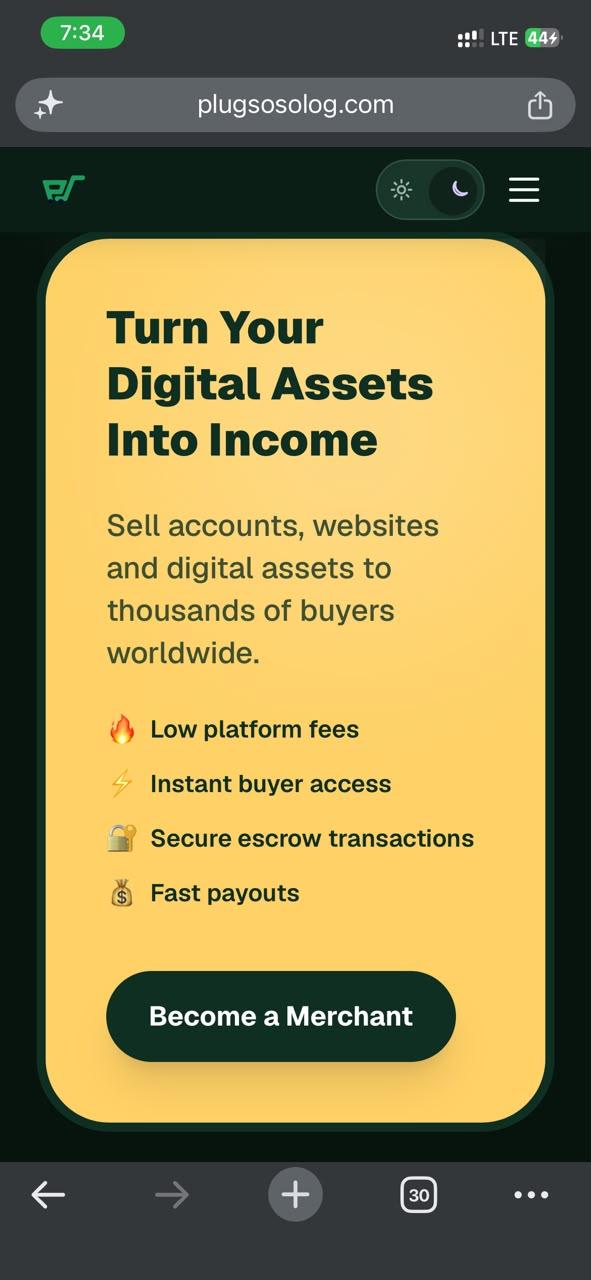
- If you have a product (ebook, template, guide, graphics), you can become a merchant and list it.
- If you have a website to sell or rent, you can list that too.
- If you offer services, you can turn your know-how into products and sell those on the platform.
To start:
- Create a free account.
- Browse the marketplace.
- Become a merchant from the merchant section.
- List with clear descriptions and fair prices.
Plugsosolog also has a referral feature: you can earn marketplace credit when someone you refer makes a transaction, and a cash reward if they become a merchant. Check the current rules in your account.
Check the Terms of Service, fees, and listing rules before you list.
Frequently Asked Questions (FAQs)
1. Which is better for a beginner: digital products or digital services?
For absolute beginners needing fast cash flow, digital services are usually easier because you can land a client and get paid immediately for your skills. Once you establish expertise, transitioning into digital products allows for passive income.
2. Do I need a website to sell digital products or services?
No. While having a professional site helps, you can easily launch, market, and sell your digital products or freelance services directly through established online marketplaces like Plugsosolog Marketplace.
3. Can I use AI to help create digital products and services?
Yes! Artificial intelligence tools are incredible for outlining ebooks, writing code, drafting client emails, and speeding up your workflow. (Discover the best tools to use in our guide on best AI tools to start and grow your online business).
4. How do I protect my digital products from unauthorized sharing?
When selling digital goods, always utilize secure delivery platforms that encrypt download links and enforce strict marketplace terms of service to prevent piracy.
The bottom line
Digital products are things you make once and sell many times. Digital services are work you do for others. Digital assets are anything digital of value that you can own and transfer, which often includes your products. Knowing the difference helps you price correctly, protect yourself, and choose the best path for your skills and goals.
Ready to try? Create your free Plugsosolog account and explore the marketplace.